
A bit over a hundred years ago, the very notion of owning a car was an extravagance, a privilege, but today most anyone can afford one. So we wonder: What is a premium car today?
The concept of “premium auto vehicle” conjures thoughts of prestigious German brands, such as Audi, Mercedes-Benz or BMW, but also the rare models Lexus or Rolls Royce. Maybe Korean brands Kia or Hyundai are not our first option when we talk of high class cars, but we must bow to the strategic intelligence of the manufacturers. They suggest a mutually advantageous compromise: Premium class cars (or “premium wannabe”’s) at accessible prices. Although the concept of “cheap premium auto” sounds like a contradiction in terms, let’s face it: the rich often check their wallets before investing in such measure, especially during the economic crisis.
During the last decade, South Korea has invested massively into affirming by any means possible as a great economic and cultural power. “Reputation” and the “national brand” are apparently of the utmost importance for the Asians. The Korean “soft power” policy has brought auto brands like Hyundai or Kia to the top.
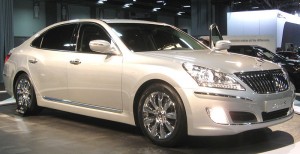
The premium models that Hyundai has prepared for 2015 are Genesis and Equus, still much more affordable than similar models manufactured by “greater” companies. Kia, on the other hand, has brought an air of power and elegant design in 2014 with its Cadenza.
Back to Europe, we must remark the tendency exhibited by German manufacturers Volkswagen or Skoda to promote certain cars to a superior class. Essentially, it is a “marketing trick”, but it’s working. Thus, VAG plans to raise Audi to the level of luxury car (from the present premium status), Volkswagen to premium and Skoda to… Volkswagen, actually.
As for Romania, models like Dacia Duster have the newest spectacular gadgets and developments like MediaNav. Who knows, maybe soon we will see Dacia raising to claim a position in the premium class.